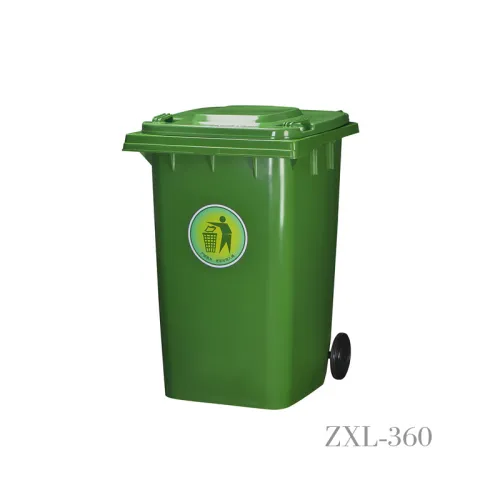
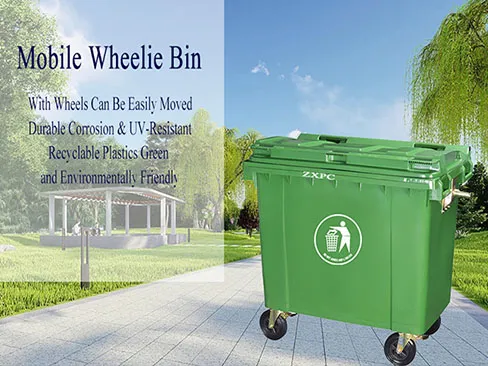
Choosing the right wheelie bin size is important for efficient waste collection and storage. Among the most common options, the 120L wheelie bin and 240l wheelie bin are widely used for residential areas, commercial facilities, public spaces, and waste management projects.
Although both bins share similar designs with wheels, handles, and durable plastic bodies, they differ significantly in capacity, footprint, loading requirements, and application scenarios.
This guide compares 120 litre wheelie bins vs 240 litre wheelie bins to help buyers select the right solution according to waste volume, available space, and usage requirements.
The main differences between the **120L and 240L wheelie bins lie in their size and capacity**. The 120L bin is suitable for singles or couples, while the 240L bin is ideal for larger families. If your household produces a lot of waste, the 240L is the better choice for efficient disposal.
?| Feature | 120L Wheelie Bin | 240L Wheelie Bin |
|---|---|---|
| Capacity | 120 liters | 240 liters |
| Waste Volume | Small to medium waste output | Medium to high waste output |
| Suitable Users | Small households, offices, small facilities | Families, commercial sites, public facilities |
| Storage Space | Compact footprint | Requires more space |
| Mobility | Easier to move when fully loaded | Higher capacity but heavier |
| Collection Frequency | More frequent emptying | Fewer collection cycles |
| Common Material | HDPE plastic | HDPE plastic |
When comparing the sizes of the 120L and 240L wheelie bins, here are the key points:
| Bin Size | Height | Width | Depth |
|---|---|---|---|
| 120L | 94 cm | 48 cm | 51 cm |
| 240L | 110 cm | 58 cm | 73 cm |
Understanding the capacity of each bin is essential for choosing the right one. Here’s a quick overview:
Choosing between the two involves knowing your household’s needs:
Both sizes of wheelie bins come with their pros:
This 120L vs 240L wheelie bin size guide highlights key differences between the two sizes. The choice depends mainly on your waste production levels. For smaller households, the 120L bin is adequate. However, if you have a larger family, the 240L bin is the best option.
A 120L model is recommended when:
Typical users include small businesses, offices, and residential properties.
A 240L model is more suitable when:
Typical applications include communities, commercial facilities, and public waste collection projects.
The main difference is capacity. A 120L wheelie bin is designed for smaller waste volumes, while a 240L wheelie bin provides double the storage capacity for larger waste collection needs.
No. A 240L wheelie bin is widely used in residential communities and larger households where more waste is generated.
Most durable wheelie bins are made from HDPE plastic, which provides strong impact resistance and weather protection.
Yes. Professional manufacturers can customize wheelie bin colors, logos, lid designs, and specifications according to project requirements.
For commercial applications with higher waste output, a 240L wheelie bin is usually preferred because it provides larger capacity and reduces collection frequency.
?ZXPC provides durable plastic wheelie bins for residential, commercial, and municipal waste management applications. With professional manufacturing capability, we offer customized solutions including capacity, color, logo, and design options.
Contact us today to get a suitable wheelie bin solution for your project.
A: If you are a single person or a couple, a 120L wheelie bin is usually sufficient. For families of four or more, the 240L bin is recommended to accommodate larger waste output.
A: Yes, while you can use a 240L bin in a small garden, ensure there is adequate space to maneuver and access the bin without obstruction.
A: The 120L bin should generally be emptied every week or two, depending on your household's waste production.
A: Yes, typically the larger 240L bin incurs a higher collection fee due to its increased capacity.
A: A 240L bin requires fewer trips to the waste collection point and is ideal for households producing substantial waste, making waste management more efficient.